What Type Is Best Agains Pokemon Water Electric Dual Type
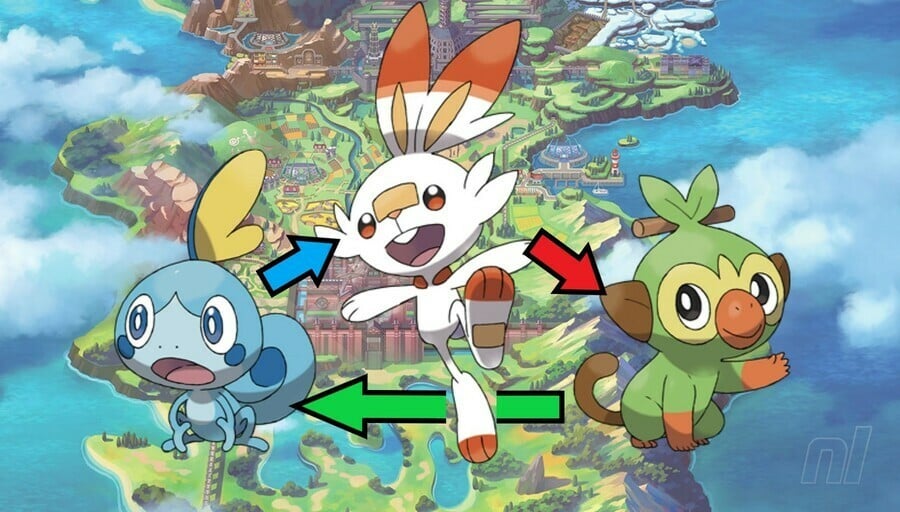
Since the very get-go the Pokémon series has depended on a delicate Stone-Paper-Pair of scissors-style residuum to its Pokémon battles. Type effectiveness is a central part of building an effective team in Pokémon Become or Pokémon Brilliant Diamond and Shining Pearl, or Pokémon Sword and Shield — or any of the other Pokémon games. Once yous know the basic strengths and weaknesses of the different types, you lot'll hands triumph against whatsoever Pokémon type you come up beyond in battle.
Every Pokémon belongs to at least one Type and will be strong (super constructive) or weak (non very effective) against other types. Some are pretty obvious - it's no surprise that Water-type Pokémon will exist potent against Burn down types, just new players coming to Brilliant Diamond and Shining Pearl (or Pokémon Sword and Shield and the Galar Pokédex) may have trouble committing the strengths and weaknesses of the 18 main types to memory. Therefore, nosotros've produced the post-obit Pokémon type chart to aid you lot speedily suss out what'due south what when information technology comes to Pokémon battles.
In this guide, we'll help yous empathize how Pokémon types relate to each other, how the mobile game calculates attack forcefulness and key ways in which this differs from the console game series.
Pokémon Type Effectiveness and Weakness Chart
Our type chart presents the 18 Pokémon types in attack and defence scenarios. To use it, merely find your Pokémon'southward blazon to see what its attacks are potent and weak against, and what it is resistant and vulnerable to when defending. This chart is designed for use with Pokémon Go, but the general strength/weakness information holds true for most every Pokémon game.
- Types bolded in foursquare brackets ("[Blazon]") are subject to a further cut in effectiveness – in the mainline games these are outright immunities
- If a blazon is not listed, harm is neutral (1x)
- The strength of an attack is increased if the attack type is strong confronting both types of a dual type Pokémon
- Type resistance and vulnerability finer cancel each other out on dual type Pokémon (resulting in a neutral attack)
| Attack | Attack | Defence force | Defence | |
| Super Effective Confronting | Not Very Effective Against (or IMMUNE TO*) | Resistant To (or Immune TO*) | Vulnerable To | |
| Effect → Blazon ↓ | Bargain i.6x damage (two.56x if ii types) | Deal 0.625x [0.39x] damage | Take 0.625x [0.39x] impairment | Take 1.6x damage |
| Grass | Footing, Rock, Water | Issues, Dragon, Fire, Flying, Grass, Poison, Steel | Electrical, Grass, Ground, H2o | Bug, Fire, Flight, Ice, Toxicant |
| Fire | Problems, Grass, Water ice, Steel | Dragon, Burn down, Rock, Water | Bug, Fire, Grass, Ice, Steel | Ground, Rock, H2o |
| H2o | Fire, Ground, Rock | Dragon, Grass, Water | Burn, Ice, Steel, Water | Electrical, Grass |
| Normal | [GHOST], Rock, Steel | [GHOST] | Fighting | |
| Bug | Dark, Grass, Psychic | Fairy, Burn down, Flying, Fighting, Ghost, Poison, Steel | Fighting, Grass, Ground | Burn down, Flying, Rock |
| Poison | Fairy, Grass | Ghost, Ground, Poison, Rock, [STEEL] | Fairy, Fighting, Grass, Poisonous substance | Ground, Psychic |
| Flying | Problems, Fighting, Grass | Electric, Rock, Steel | Problems, Fighting, Grass, [Footing] | Electric, Water ice, Stone |
| Electric | Flight, Water | Dragon, Electric, Grass, [Footing] | Electric, Flying, Steel | Ground |
| Ground | Electrical, Burn down, Poison, Rock, Steel | Bug, [Flight], Grass | [Electric], Poisonous substance, Rock | Grass, Ice, H2o |
| Rock | Issues, Fire, Flight, Ice | Fighting, Basis, Steel | Fire, Flying, Normal, Toxicant | Fighting, Grass, Footing, Steel, Water |
| Water ice | Dragon, Flight, Ground, Grass | Fire, Ice, Steel, Water | Ice | Fire, Fighting, Rock, Steel |
| Steel | Fairy, Ice, Stone | Electric, Burn down, Steel, Water | Bug, Dragon, Fairy, Flying, Grass, Water ice, Normal, [Toxicant], Psychic, Rock, Steel | Fighting, Fire, Ground |
| Fighting | Dark, Ice, Normal, Stone, Steel | Bug, Fairy, Flight, [GHOST], Poisonous substance, Psychic | Problems, Dark, Stone | Fairy, Flying, Psychic |
| Dark | Ghost, Psychic | Dark, Fairy, Fighting | Dark, Ghost, [PSYCHIC] | Bug, Fairy, Fighting |
| Ghost | Ghost, Psychic | Dark, [NORMAL] | Bug, [FIGHTING], [NORMAL], Poison | Dark, Ghost |
| Psychic | Fighting, Poison | [Nighttime], Psychic, Steel | Fighting, Psychic | Issues, Nighttime, Ghost |
| Dragon | Dragon | [FAIRY], Steel | Electric, Fire, Grass, Water | Dragon, Fairy, Water ice |
| Fairy | Night, Dragon, Fighting | Fire, Poison, Steel | Issues, Dark, [DRAGON], Fighting | Poison, Steel |
Annotation that attack and defence force type relationships are not identical – e.g. types may be resistant to types when defending that they are non super effective confronting when attacking.
Remember, things get even more interesting when Pokémon of dual types crop up and you have to cistron in additional strengths and weaknesses.

Pokémon GO Type Chart: How To Retrieve Pokémon types
For anyone who has invested years (or quite possibly decades) of play into this serial, the type organization becomes 2nd nature. While in time your memory besides will retain well-nigh of, if non the full prepare of relationships (probably in space previously reserved for less important things such every bit the periodic table of elements, or correct performance of a scientific calculator) it is worth learning the logical relationships that do exist.
The classic example taught at the beginning of every Pokémon game is that fire is super effective confronting grass, which is in turn super effective against water, which is in turn super constructive against fire. This is piece of cake plenty to follow – fire burns grass, grass thrives with water, h2o puts out fire – but finding like relationships in the other 18 types is will help you lot remember the system.
Hither are another ideas to become you lot started:
- Rock's effectiveness confronting flying is reminiscent of the phrase "kill two birds with one rock"
- Similarly, psychic is effective against fighting considering "brains are better than brawn" – only psychic is vulnerable to dark and ghost because the mind cannot cope with the unknown and supernatural
- Basis types are allowed to electric attacks because being grounded is an important principle in electric circuits – only ground can exist swept abroad be water, cracked by ice and exploited by grass.
How does Pokémon GO type effectiveness differ to other Pokémon games?
Skilful news - our type chart above works for mainline Pokémon games also, with each blazon sharing the same effectiveness and resistances. There are, however, subtle changes fabricated to the amount of damage involved in each grouping, and type differences in earlier games that need to be taken into business relationship:
No concept of immunities/no consequence
Every attack in Pokémon GO amercement an opposing monster – in the mainline games, a modest number of blazon matchups really result in no damage i.east. immunity, unremarkably with the message "Ten has no effect". These matchups are:
- Normal and Fighting immune to Ghost
- Flying immune to Ground
- Ground immune to Electrical
- Steel immune to Poisonous substance
- Dark immune to Psychic
- Ghost immune to Normal and Fighting
- Fairy allowed to Dragon
These special cases still exist in Pokémon GO, all the same, they do around a third normal impairment [0.39x] rather than doing no impairment at all. In our type chart, these type 'immunities' are bolded and placed in square brackets. REMEMBER - in the mainline games similar Pokémon Sword and Shield, these attacks will accept no issue any!
Different multipliers explained
Pokémon GO operates with like principles to the mainline games, however type advantages and disadvantages are by and large toned downward (making things less punishing for newcomers who are yet to become downward the complexities of the organization).
| Pokémon GO Impairment Multiplier | Mainline Pokémon Impairment Multiplier | |
| Strong against | 1.6x | 2x |
| Weak confronting | 0.625x | 0.5x |
| "Immunity" | 0.39x | 0x |
| Two blazon vulnerability | two.56x | 4x |
Historical changes to Pokémon types in mainline Pokémon games
When using the type chart for older (Gameboy, GBA, DS) mainline Pokémon games bear in mind that the following changes were made to the blazon organisation. These changes applied to all subsequent games, including remake titles (i.e. Pokémon Let's Become Pikachu and Eevee use the Pokémon X and Y rules)
Generation half-dozen (Pokémon X and Y)
- Fairy type added (Fairy typing was added to legacy Pokémon such as Jigglypuff, Marill and Cottonee)
- Ghost and Dark-type moves made neutral against Steel (formerly 'not very effective')
Generation 2 (Pokémon Aureate, Silverish and Crystal)
- Dark and Steel types added (Steel typing was added to Magnemite going forward)
- Bug-type moves made ineffective against Poison (formerly super-effective)
- Poison-blazon moves made neutral against Bug (formerly super-effective)
- Water ice types made not very effective against Burn (formerly neutral)
- A programming bug that made the Ghost-type move 'Lick' ineffective against Psychic Pokémon was fixed (should have been super-constructive)
With the addition of new types over the years, the Pokémon type system has got a fiddling more than complicated than Rock-Paper-Scissors, only in one case yous've committed the above to retentivity (or - shh - just left this page open on your phone as yous play), you'll have no trouble finding the correct Pokémon for the right job.
If y'all're eager for a full list of the 400 Pokémon bachelor in the Galar Pokédex, check out our snazzy Galar Pokédex database tool. You lot can also find out more than about the iii Pokémon Sword and Shield starters and their evolutions, hunt out Easter Eggs in Pokémon Sword and Shield, and find out how to find and evolve Galar region Pokémon from Sirfetch'd to Frosmoth, Alcremie and many more.
burnettsaimandeper.blogspot.com
Source: https://www.nintendolife.com/guides/pokemon-go-type-chart-explained-effectiveness-and-weakness-for-all-types
0 Response to "What Type Is Best Agains Pokemon Water Electric Dual Type"
Post a Comment